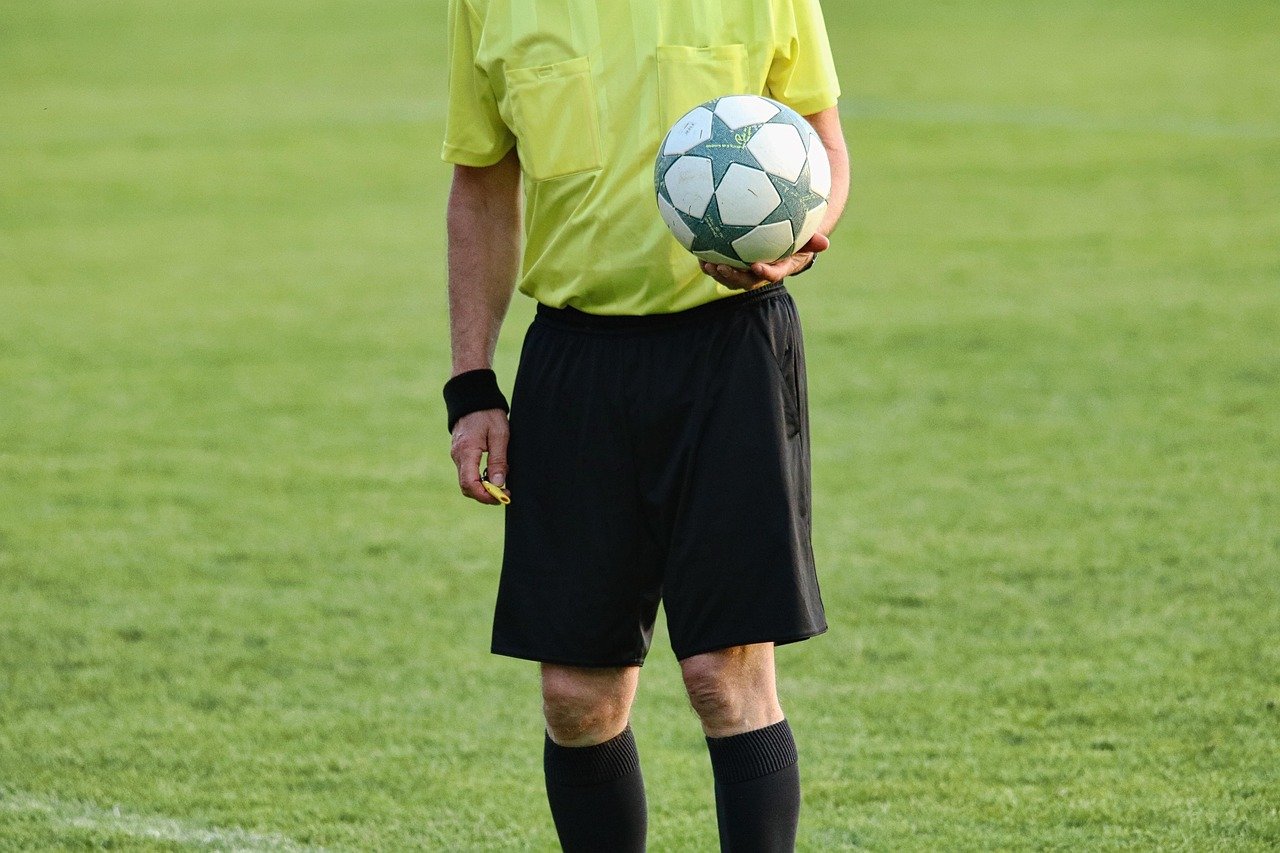
VAR Diving Decision Sparks Controversy: Are the New 2026 World Cup Rules Causing More Confusion Than Clarity?
Football is no stranger to controversy, but the latest buzz surrounding the beautiful game has nothing to do with a last-minute goal or a red card shocker. Instead, it’s the new rulebook heading into the 2026 World Cup that’s got fans, pundits, and players scratching their heads — and not in a good way.
A wave of fresh regulations and tweaks to existing laws have been rolled out ahead of the biggest football tournament on the planet. While the intentions behind these changes are clearly good, the execution is raising some serious eyebrows — particularly around one of football’s most heated debates: diving and VAR decisions.
What Are the New Rules Actually Saying?
Football’s governing bodies have introduced a series of updates designed to clean up the game and make it fairer for everyone involved. Among the most talked-about changes is a stricter approach to simulation — more commonly known as diving — and how VAR (Video Assistant Referee) technology is used to identify and punish it.
Under the updated framework, referees and VAR officials are being given clearer guidance on when a player has deliberately gone to ground to win a penalty or free kick. The idea sounds logical on paper: if a player dives, they get penalised. Simple, right? Well, not quite.
The problem is that football has always lived in a grey area when it comes to contact and falling. A player can be touched lightly and still go down dramatically — but that doesn’t always mean it’s a dive. And now, with new rules adding layers to what VAR can and cannot review, the whole thing is getting murkier by the match.
The Incident That’s Got Everyone Talking
A recent high-profile VAR call involving an apparent diving decision has reignited the debate in a massive way. The decision — which many fans and analysts felt was technically correct under the new guidelines — still left a sour taste in the mouth because it just didn’t feel right in the context of the game.
That’s the crux of the issue. When a ruling feels wrong even though it might be technically right, you have a problem. Football is an emotional sport. It’s watched and loved by billions of people who go by their gut instincts, their passion, and their understanding of the game built over decades. When new rules start clashing with that instinct, the backlash is immediate and fierce.
The VAR system was introduced to eliminate clear and obvious errors. But increasingly, it seems to be creating new ones — or at least new arguments — with every passing weekend. And with the 2026 World Cup on the horizon, the timing of this confusion couldn’t be worse.
Why the 2026 World Cup Raises the Stakes
The 2026 FIFA World Cup is set to be the biggest in history, expanding to 48 teams for the first time and spanning three host nations — the United States, Canada, and Mexico. With more games, more teams, and more global attention than ever before, getting the officiating right is absolutely critical.
Any controversial call at a World Cup gets amplified a thousand times compared to a regular league match. Remember the Hand of God? The phantom goal in 2010? These moments live forever in football’s memory. Imagine a World Cup knockout stage game decided by a VAR diving call that half the world thinks is wrong — the fallout would be enormous.
That’s why the football community is paying such close attention to how these new rules are being applied right now, in the lead-up to the tournament. The next year or so is essentially a testing ground, and the results so far are… mixed.
Referees Caught in the Middle
It’s easy to blame referees when things go wrong, but let’s be honest — their job has never been harder. They’re now expected to interpret rules that are still being refined, apply them in real time at pace, and then have every decision scrutinised in slow motion from fifteen different camera angles.
The new diving guidelines put referees in a particularly tough spot. They have to make a judgement call not just on whether contact was made, but on the intent of the player — and intent is one of the hardest things to prove in any context, let alone in a split-second football moment.
VAR was supposed to take the pressure off referees by giving them a safety net. Instead, it’s created a situation where every decision is questioned, every review is debated, and every outcome is contested. Referees are damned if they do and damned if they don’t.
The Fan Perspective: Emotion vs. Technology
Ask any football fan what they think of VAR and you’ll get a passionate response — usually not a positive one. The technology was meant to bring justice to the game, but many supporters feel it’s stripped away the spontaneous joy that makes football so special.
There’s nothing quite like the moment a goal goes in — the eruption of the crowd, the players piling on top of each other, the pure unbridled celebration. And then VAR kicks in, everyone freezes, and you wait. And wait. For a decision that may or may not make sense once it’s announced.
The new rules around diving add another layer to this frustration. Fans are now watching games wondering not just if a goal will be ruled out for offside, but whether a penalty appeal will be overturned because someone decided a player exaggerated contact. It’s a lot to process, and it’s changing the viewing experience in ways that not everyone is comfortable with.
Are the Rule Changes Actually Necessary?
Let’s give credit where it’s due — diving is a genuine problem in football, and it has been for years. Players have been gaming the system for as long as anyone can remember, throwing themselves to the ground at the slightest touch to win free kicks and penalties. It’s cynical, it’s unsporting, and it undermines the integrity of the game.
So yes, cracking down on simulation is a worthy goal. The question is whether the current approach is the right way to do it. Some football analysts are arguing that rather than giving VAR more powers to second-guess decisions, the focus should be on better referee training and a clearer, more consistent standard of what constitutes a foul in the first place.
Others are calling for retrospective bans for players who are caught diving — a measure that would force players to think twice before hitting the deck. It worked to some extent in cricket with the Decision Review System changing player behaviour over time. Could football take a similar approach?
What Needs to Change Before 2026
Football’s lawmakers — FIFA and the International Football Association Board (IFAB) — need to act fast if they want the 2026 World Cup to be remembered for the football rather than the officiating controversies. The window to iron out these issues is closing quickly.
First and foremost, there needs to be absolute clarity in the rulebook. Referees, players, and fans should all be able to understand what is and isn’t a dive, and what VAR can and cannot intervene on. Ambiguity is the enemy of good officiating.
Secondly, communication needs to improve. When VAR makes a decision, the reasoning should be explained clearly — ideally to the crowd in the stadium and to viewers at home. Transparency builds trust, and right now, trust in the system is at an all-time low.
Finally, there needs to be a cultural shift in the sport. Diving has been tolerated — even celebrated in some quarters — for too long. Changing the rules is only part of the solution. Changing the attitude is the bigger challenge.
The Bigger Picture: Football at a Crossroads
The debate over VAR, diving, and the new rules isn’t just about one controversial decision or one tournament. It’s a reflection of a sport wrestling with its identity in the modern age. Football is trying to embrace technology and modernise while staying true to the raw, passionate, imperfect game that billions of people fell in love with.
That’s a delicate balance, and right now, it feels like the scales are tipping in the wrong direction. The 2026 World Cup has the potential to be the greatest tournament in history — but only if the people running the game can get their act together before kickoff.
The clock is ticking. And football fans around the world are watching very closely.
What Do You Think?
Are the new VAR and diving rules making football fairer, or are they adding unnecessary confusion to the game? Do you think the changes will help or hurt the 2026 World Cup experience? Drop your thoughts in the comments — we want to hear from you!
This article is for informational purposes only.
Leave a Reply